
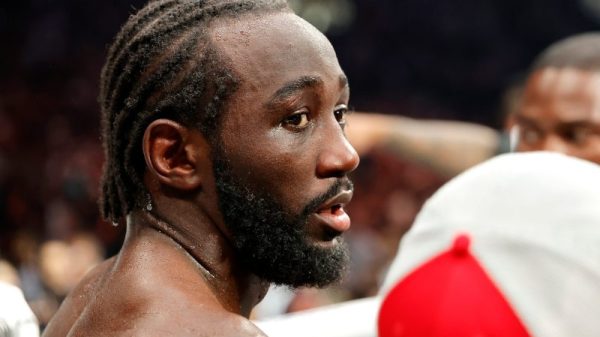
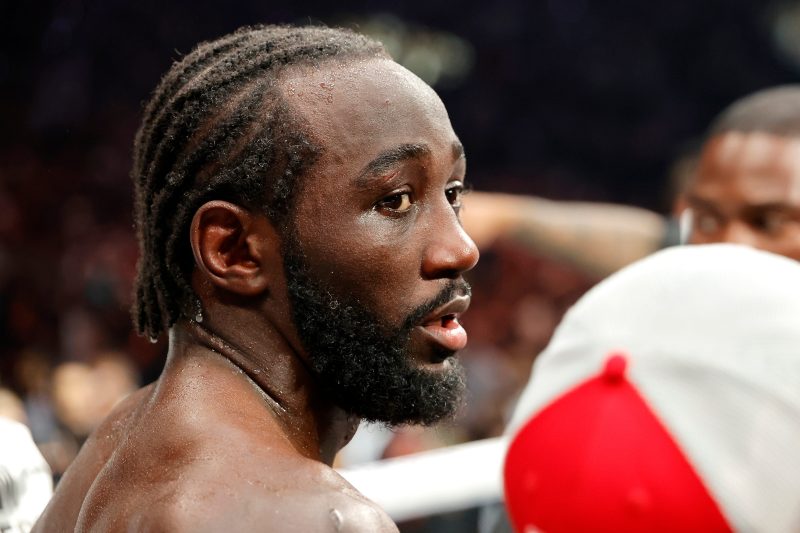
When Terence Crawford blasted WBC president Mauricio Sulaimán Nov. 3, the timing was as notable as the trigger.
Crawford fumed after the WBC stripped him of a championship belt the boxing star won by beating Canelo Alvarez Sept. 13. His transgression: the boxing star failed to pay the WBC $300,000 in sanctioning fees for the fight against Alvarez.
The timing: The friction between Crawford and the WBC, one of boxing’s four sanctioning bodies, comes at a time of potential change as the sport struggles to stay relevant.
“One tries to be optimistic,’’ said Mike Silver, a boxing historian and author of “The Arc of Boxing: The Rise and Decline of the Sweet Science.” “But when considering boxing’s tawdry history it’s hard to be optimistic, especially when considering who is in charge.’’
Actually, between the four sanctioning bodies, various promoters and the absence of a commissioner, it’s hard to know who’s in charge.
But it’s easy to see who’s looking to assume power.
Dana White has built the UFC into a multibillion-dollar company while helping mixed martial arts overtake boxing as the king of combat sports. Now, White has entered the boxing world as a promoter, and with billions at his disposal. He has partnered with Turki Alalshikh, the frontman for Saudi Arabia’s massive investment in boxing.
“For now, all we can do is take a wait-and-see attitude,’’ Silver told USA TODAY Sports. “The danger is that with a new major promotional entity entering the fray, boxing may become even more fragmented and confusing than it is.’’
HBO and Showtime, once the leading platforms for broadcasting boxing, have pulled the plug on the sport.
Can Dana White rescue boxing?
DAZN, the global streaming service, has taken over as the key player. But even with Netflix showing interest in high-profile events like Mike Tyson vs. Jake Paul and Crawford vs. Alvarez, there is a dearth of options to broadcast the fights.
There are no such issues for the UFC.
Earlier this year, under White’s leadership, UFC landed a seven-year, $7.7 billion deal with Paramount, the streaming service that will annually show more than 40 UFC events. But that’s not all.
Paramount also has agreed to stream 12 boxing cards a year for Zuffa Boxing, founded by White, who serves as CEO.
As co-founder of the UFC, White succeeded in part by matching up the best fighters. In boxing, by contrast, competing promoters and the effort to protect a boxer’s record often delay or derail mega fights. That made it an even bigger deal when Crawford and Alvarez squared off in a bout held at Allegiant Stadium and streamed by Netflix.
Who was the promoter? That would be White, who made his foray into boxing with that fight.
But the benefits of the UFC’s system are questionable. For every star cashing in, there are plenty of others struggling financially.
Lesser-known fighters filed an antitrust lawsuit in 2014, accusing Zuffa LLC, then UFC’s parent company, of suppressing fighter pay through anticompetitive practices.
In 2024, the UFC settled the case for $375 million. Two other class-action suits are pending. Another class-action lawsuit was filed this year.
Who benefits most from the business model?
The UFC was sold in 2016 for $4 billion. Most of the money went to co-founders Lorenzo and Frank Fertitta. But White made roughly $360 million, according to ESPN, and stayed on as president and CEO.
Thanks in part to White, Crawford enjoyed the most lucrative night of his career when he fought Alvarez. (For the record, the WBC helped make that happen by sanctioning the fight even though Crawford was moving up two weight classes.)
A new belt enters the ring
White’s success will hinge in part on the success of The Ring, a media outlet and magazine bought last year by Alalshikh, the Saudi deal broker. For the fight between Crawford and Alvarez, The Ring created a new gold version of the super middleweight championship belt, reportedly worth $188,000.
During his rant, Crawford pointed out that he got the belt for free. The Ring charges no sanctioning fees.
The Ring has not shared its playbook. Perhaps it intends to operate like the UFC and marginalize the competition. (We’re looking at you, sanctioning bodies.) Or perhaps it wants to operate like LIV Golf, the Saudi-owned men’s golf league that has spent billions of dollars in an attempt to overtake the PGA Tour.
Would The Ring ruling boxing be good for the fighters?
The best of the best, like Crawford, would remain well-paid stars. It’s the same for UFC stars. But the rest?
The sanctioning bodies have created more opportunities for boxers to fight for championships across 18 weight divisions. However, what’s served boxers hasn’t necessarily been good for the sport.
As promoter Lou DiBella texted, “THE TITLES MEAN NOTHING. Everybody is a champ.’’
Added DiBella, “The whole system of four (sanctioning bodies) needs to end.’’
Crawford forsook the WBC even though the WBC helped make the fight lucrative by sanctioning it. But Silver, the historian, did not take the position that Crawford tainted his reputation with his profane rant.
“I’ve been waiting for years for a major recognized champion to say this,’’ Silver said by email. “Kudos to Crawford! He is ‘the People’s Champion’ and that is all that matters. No belt is necessary.’’
Only it’s far too early to know if boxing is about to be saved or sunk.