










The College Football Playoff schedule is seen as inefficient compared to the NFL’s postseason.
Leaders recently moved a playoff game to avoid a scheduling conflict with the NFL.
A new, fixed playoff schedule ending with the championship on New Year’s Day would be big improvement.
Of all the change and disruption and uncertainty over the last five years of college football, nothing is more perplexing in the new NIL world.
Somehow, the sport’s leaders can’t even control the controllable.
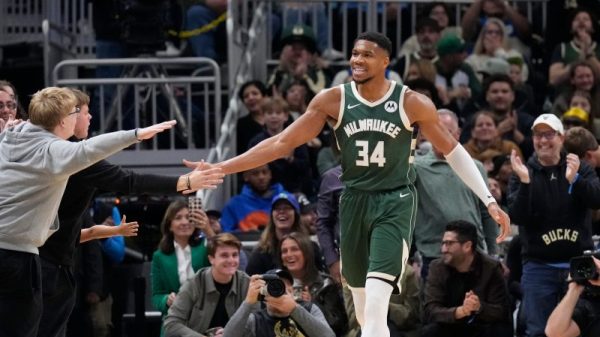
This season, the NFL — a financial goldmine of success and popularity — will play 13 playoff games in 30 days, finishing the annual joy ride Sunday with Super Bowl LX.
Clean, neat, efficient.
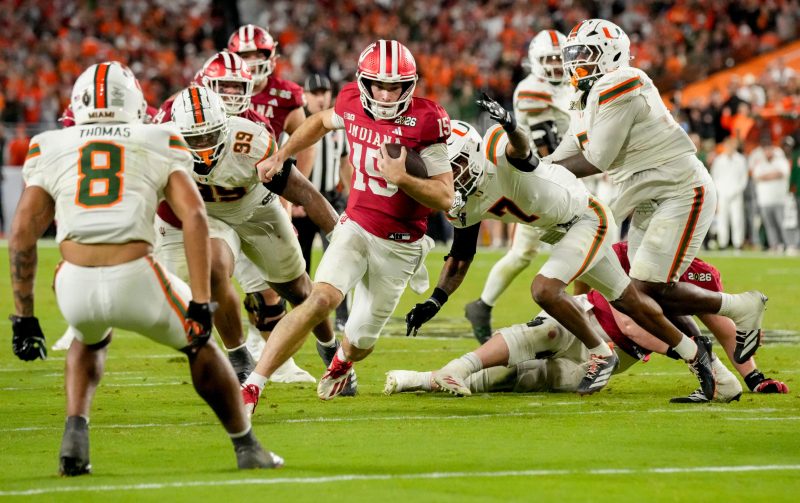
Next season, College football — a financial whirlwind of the overwhelmed, stuck in a glass booth cash grab and frantically stabbing at anything that moves — will play 11 College Football Playoff games in 39 days.
Dirty, messy, inefficient.
To say nothing of completely wrecking the college football player procurement calendar, and putting undue stress on coaches and players, and recruitable high school players.
“It’s not that difficult to figure out,” Oregon coach Dan Lanning told me last month before the CFP quarterfinals. “Too many excuses, not enough action.”
Yet there was the CFP earlier this week, announcing next year’s quarterfinals would move off New Year’s Eve to avoid a scheduling conflict with a regular season NFL game. That’s the game plan, everyone: a malleable CFP, that works for all ― including the NFL.
The questions is why? Why won’t college football’s leaders — apparently, SEC commissioner Greg Sankey and Big Ten commissioner Tony Petitti, at the behest of their 34 university presidents — construct a playoff that begins the week after conference championship games and ends on New Year’s Day?
A day later, the transfer portal opens for two weeks. Clean, neat, efficient.
You’re not competing with the NFL for television eyes, you’re not pushing the sport well into the second semester. This is your postseason, it will not change year to year. Period.
This is how you build a predictable and successful product that lasts and sustains, and grows year over year. You know, like the NFL.
It’s only the most important piece to the future financial wellbeing of college football, so maybe we should focus on it. Whaddya say, everyone?
The postseason is everything in all sports. It determines champions, it delvers drama, it’s what television craves. It earns big, big dollars.
Yet those in charge of college football can’t stop mucking it up.
This has nothing to do with the number of teams in the CFP, it has everything to do with when the dang thing is played. That’s the most important piece to this puzzle going largely ignored.
Why wouldn’t the 34 presidents of the SEC and Big Ten simply move back the season one week — to the current Week Zero spot — and play championship week on Thanksgiving weekend? The first person who screeches “tradition!” gets flogged with a wet noodle.
Gimme a break. Tradition?
You’ve dissected the sport into unwieldy Power quarters, eaten your own in the process, opened the doors to unregulated free agency and all but ignored academics.
Tradition limped off the road a couple of exits back, bub.
The week after Thanksgiving is the first round of the CFP on campus. The second week of December — where bowl games can still be used and celebrated — is for the quarterfinals. The third week of December is the semifinals, and New Year’s Day is your national championship game.
I think we can all agree the best place for the national championship game — on a day college football has owned forever — is the majestic Rose Bowl. Every single season, at 4 p.m. ET., with the sun setting on the picturesque San Gabriels at the start of the second half.
There’s your nod to tradition. I’m getting goosebumps just writing it.
A 16-team field doesn’t change this format, but a 24-team field would move the start of the season one week earlier. That’s right, those poor, overworked coaches and players ― in the ridiculous 24-team scenario ― will have to start the season in the third week of August. And take their millions with them.
The postseason is now a multi-billion dollar business. Run it like one.
Build it, sustain its scheduling predictability, and protect its money-generating viability from the NFL’s greedy paws.
The NFL gets free player development from college football, is given free access to coaches and game tape during the season to scout players, and still refuses to defer to college football with scheduling conflicts.
The NFL is in it for the NFL. It’s time college football becomes all about college football.
Make a schedule, and stick to it. And make billions.
Control the controllable.